
Mehr Center report — 13 November 2026
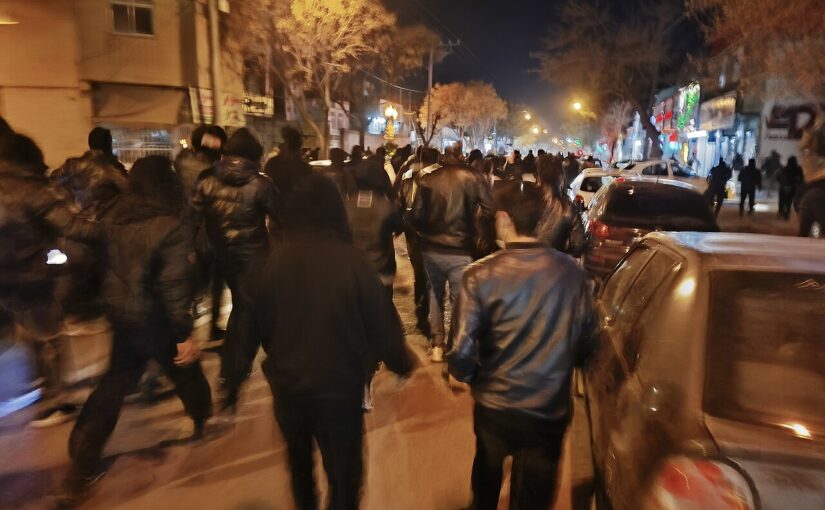
Since 19 March 2026, the authorities of the Islamic Republic of Iran have executed at least 39 people in connection with the nationwide protests of December 2025 and January 2026, according to the count kept by Iran Human Rights (IHRNGO). Most were young men, several were teenagers at the time of their arrest, and almost all were convicted after fast-tracked trials in which human rights organisations report the use of forced confessions and the denial of independent lawyers. The pace of executions has increased in recent months, to roughly one a week, and dozens more protesters remain on death row.
This report records the names of those executed that Mehr Center has been able to confirm from multiple public sources, describes the patterns in these cases, and calls for an immediate halt to executions.
From threats to executions
On 10 January 2026, two days after the authorities cut internet and telephone services nationwide, the Prosecutor General declared that protesters had committed moharebeh (“enmity against God”), a charge that carries the death penalty. The Head of the Judiciary instructed courts to act quickly and without leniency. By mid-February, more than 10,500 people had been referred for prosecution.
The first executions took place on 19 March 2026 in Qom. After a pause in public announcements following the start of military strikes on Iran on 28 February, executions resumed and then accelerated after internet access was restored in late May.
Those executed
The following people were executed in connection with the protests. Ages are as reported; descriptions of the cases are those given by the authorities and have not been independently verified.
| Date (2026) | Name | Age | Place | Case as described by the authorities |
|---|---|---|---|---|
| 19 March | Saleh Mohammadi | 19 | Qom | Killing of two police officers in Qom on 8 January. A member of Iran’s national wrestling team. |
| 19 March | Mehdi Ghasemi | – | Qom | Same case |
| 19 March | Saeed Davoudi | – | Qom | Same case |
| 2 April | Amirhossein Hatami | 18 | Ghezel Hesar Prison, Karaj | Attack on a Basij base in Tehran on 8 January |
| 5 April | Mohammad Amin Biglari | 19 | Ghezel Hesar Prison | Same Basij base case |
| 5 April | Shahin Vahedparast | 30 | Ghezel Hesar Prison | Same Basij base case |
| 6 April | Ali Fahim | 23 | Ghezel Hesar Prison | Same Basij base case |
| 3 May | Mehdi Rasouli | 25 | Vakilabad Prison, Mashhad | Death of a Basij member during protests in Mashhad |
| 3 May | Mohammadreza Miri | 21 | Vakilabad Prison, Mashhad | Same case |
| 3 May | Ebrahim Dolatabadinejad | – | Mashhad | Accused of leading protesters; executed six days after sentencing |
| 13 May | Mohammad Abbasi | 55 | Ghezel Hesar Prison | Killing of a police officer in Malard. His daughter was sentenced to 25 years in prison. |
| 1 June | Ashkan Maleki | – | Ghezel Hesar Prison | Arson at a mosque and seminary in Tehran |
| 1 June | Mehrdad Mohammadinia | – | Ghezel Hesar Prison | Same case |
| 3 June | Fathollah Avari | 42 | Hamedan | Death of a police officer in Hamedan on 8 January |
| 16 June | Javad Zamani | – | Shahroud Prison, Semnan | Described as “armed leaders” of protests in Shahroud |
| 16 June | Abolfazl Saedi | – | Shahroud Prison, Semnan | Same case |
| 15 July | Mohammad Amini Dehaghani | – | Isfahan Province | Protests in Dehaqan |
| 19 July | Erfan Esfandiari | 18 | Isfahan Central Prison | “Alikhani Square” case, Isfahan |
| 19 July | Gol-Mohammad Mohammadi | 23 | Isfahan Central Prison | “Alikhani Square” case. An Afghan national. |
| 22 July | Mehdi Khanaki | – | Karaj | Protests in Karaj; also accused of membership of the PMOI/MEK |
| 28 July | Abolfazl Sepahi Badjani | 25 | Isfahan (public execution) | “Alikhani Square” case |
| 28 July | Amirhossein Safari Hosseinabadi | 28 | Isfahan (public execution) | “Alikhani Square” case |
| 16 August | Shahram Sadeghi | – | Karaj | Driving a car into police officers in Karaj on 8 January |
| 20 August | Ghaem (Arian) Hosseini | 21 | Isfahan Central Prison | “Alikhani Square” case. An Afghan national. |
| 23 August | Majid Adineh | – | Karaj | Protests in Karaj |
| 30 September | Ali Hemmati Sistanian | – | Vakilabad Prison, Mashhad | Deaths of security personnel during protests in Mashhad |
| 30 September | Majid Nikandish | 25 | Vakilabad Prison, Mashhad | Same case |
| 3 October | Siavash Jamshidi Kheirabadi | – | Shahr-e Kord | Firing a gun during protests in Shahr-e Kord. A taekwondo athlete. |
| 5 October | Alireza Sepahi | 24 | Isfahan | “Alikhani Square” case |
| 5 October | Alireza Raeisi | 21 | Isfahan | “Alikhani Square” case. Arrested hours after a cousin was killed in the protests. |
| 3 November | Amirhossein Maleki | 19 | Isfahan Central Prison | “Alikhani Square” case |
| 3 November | Amirhossein Ebrahimi | 19–20 | Isfahan Central Prison | “Alikhani Square” case. A medical student. |
| 8 November | Hassan Divband | – | Karaj | Sabotage of an electricity substation in Karaj. No deaths were alleged. |
| 8 November | Hamid Kazemi | – | Karaj | Same case |
| 8 November | Reza Zanganeh | – | Karaj | Same case |
The names of at least four further people executed in connection with the protests could not be confirmed from multiple sources at the time of writing. Because many executions were carried out in secret, and families were often pressured to remain silent, the true number may be higher.
Patterns of concern
- Unfair trials. Human rights organisations, including Amnesty International, report that defendants were denied lawyers of their choosing, that proceedings were fast-tracked, and that convictions relied on confessions allegedly obtained under torture. Several confessions were broadcast on state media.
- Speed and secrecy. Some executions took place within days of sentencing. Families were frequently not informed in advance or allowed a final visit, and some cases became known only when the execution was announced.
- Young people. Many of those executed were between 18 and 25 years old. At least one defendant still at risk was 17 at the time of the alleged offence.
- Executions without any killing alleged. Several of those executed, including the three men hanged in Karaj on 8 November, were not accused of causing anyone’s death. International law restricts the death penalty to the “most serious crimes”, meaning intentional killing.
- Public executions. Two men were hanged in public in Isfahan on 28 July.
- Mass cases. Nine people have been executed in the single “Alikhani Square” case in Isfahan, and four in the Tehran Basij base case.
At imminent risk
Dozens more people are under sentence of death in connection with the protests. Those reported to be at imminent risk include:
- Shervin Bagherian, who was 17 at the time of the alleged offence, Ali Dashti, 20, and Abolfazl Ebrahimi, 18 — the remaining defendants in the “Alikhani Square” case in Isfahan;
- Arman Maarefati, 38, whose death sentence has been upheld by the Supreme Court;
- Matin Farnian, 23, and Vahid Khedrikhah, 34, sentenced in Mashhad;
- Pouria Hosseini-Mofrad, 23, whose case is before the Supreme Court;
- Shayan Shakibayi, 29, sentenced to death in Kerman on 30 October.
In September 2026, the UN Independent International Fact-Finding Mission on Iran concluded that the authorities’ response to the protests amounted to crimes against humanity, including murder, imprisonment and torture.
Our recommendations
To the authorities of the Islamic Republic of Iran:
- Do not carry out any more executions. Halt all executions, quash every death sentence issued in connection with the protests, and move towards abolishing the death penalty;
- Do not use lethal force against protesters. Respect the right of people to gather and protest peacefully and to express their views freely;
- Release everyone detained for peaceful protest, and guarantee fair trials, free of coerced confessions and with lawyers of the defendants’ choosing, for anyone still charged;
- Begin a genuine national dialogue and process of reconciliation with the people of Iran: listen to their grievances, acknowledge the victims, and make peace with the country’s own citizens;
- Tell families the truth about their loved ones, return bodies without conditions, and end all pressure on bereaved families;
- Allow independent investigation of the allegations of torture and ill-treatment, through fair processes and never through the death penalty;
- Grant the UN Fact-Finding Mission and the Special Rapporteur access to the country.
To the international community:
- Urge the Iranian authorities, publicly and privately, not to carry out any more executions, raising the names of those at imminent risk;
- Support peaceful solutions: encourage dialogue between the Iranian authorities and the people of Iran, and an end to violence by all sides;
- Support the UN Fact-Finding Mission and the Special Rapporteur in establishing the truth for victims and their families;
- Provide protection, humanitarian visas and medical and psychosocial support to people fleeing persecution in Iran.
Mehr Center honours the memory of those executed and stands with their families. We will continue to document these cases.
Sources
- Iran Human Rights (IHRNGO), case reports including Amirhossein Hatami, Biglari and Vahedparast, Ali Fahim, Mohammad Abbasi, Fathollah Avari, Mehdi Khanaki, Shahram Sadeghi, Majid Adineh
- Amnesty International, Five protesters executed in one week after torture-tainted trials (October 2026) and End escalating campaign of arbitrary executions (July 2026)
- Iran International, Iran sentences two more protesters to death (5 November 2026)
- Hengaw Organization for Human Rights, reports on Mashhad executions and Shahroud executions
- CBS News / AFP, first executions over January protests (19 March 2026)
- South China Morning Post, Iran executes 3 more men over January protests (8 November 2026)
- Center for Human Rights in Iran, UN: crimes against humanity in suppression of January 2026 protests (September 2026)
- UN Independent International Fact-Finding Mission on Iran, report A/HRC/61/60 (March 2026)
